
When Gods Arrive in Colour and Flame: The Sacred Theatre of Theyyam
Updated: Apr 23
In the northern reaches of Kerala, where temple lamps flicker against humid twilight and the scent of incense drifts through coconut groves, divinity does not remain distant. It arrives. It moves. It inhabits the human form. This is Theyyam. A tradition where folklore, devotion, theatre, and ancestral memory converge in an arresting spectacle of presence.
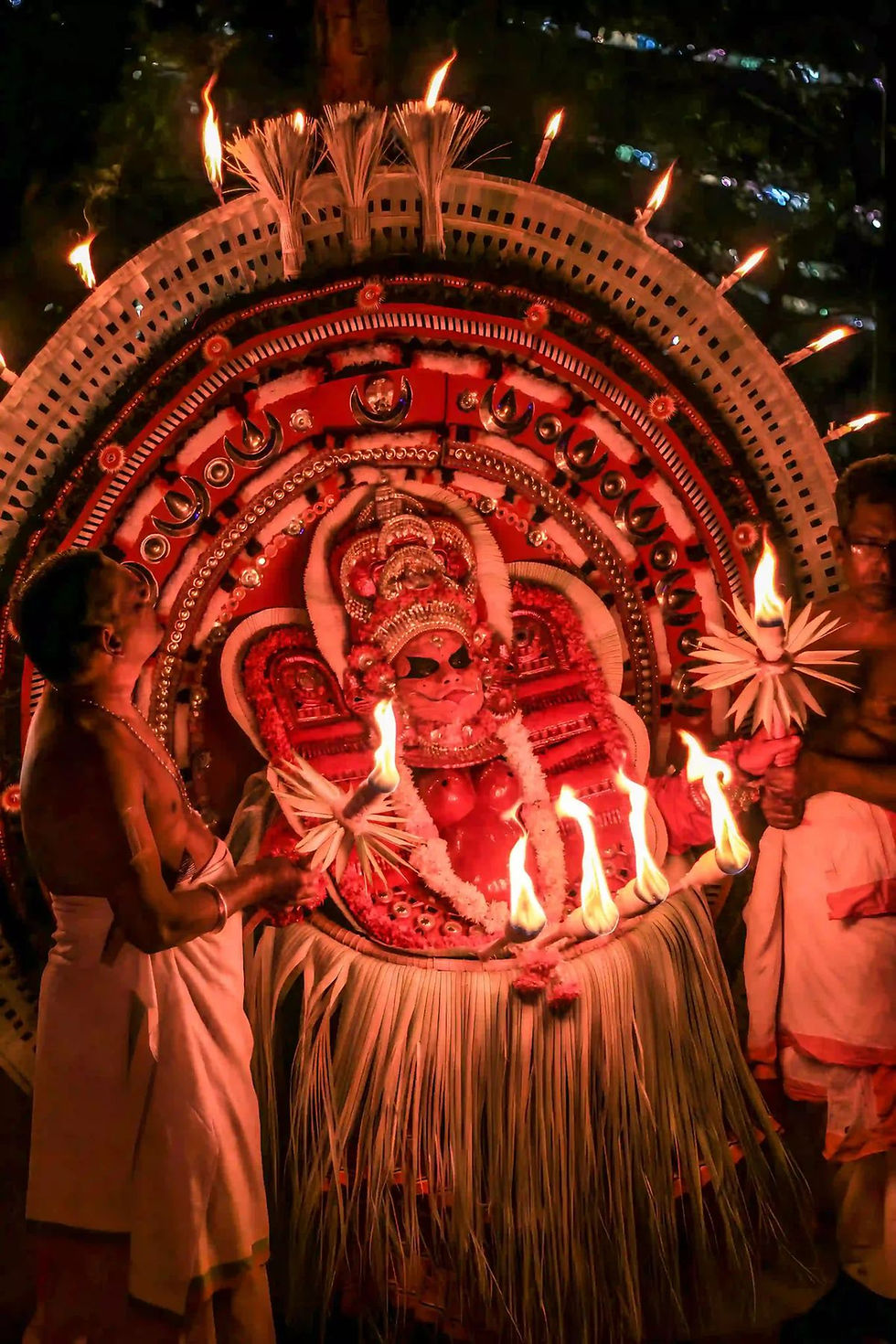
Preparation begins long before nightfall. Hours are devoted to sacred transformation carried out with meditative precision. Faces turn into intricate canvases painted with mineral pigments and symbolic geometry. Costumes rise in layers of astonishing detail. Towering headgear. Expansive skirts. Palm leaf structures. Ornaments that catch and scatter firelight. The body is not merely adorned. It is consecrated.
Then comes the crossing. To the primal resonance of chenda drums and ritual chant, the performer steps into altered presence. He does not portray the deity. He becomes the vessel through which the divine is believed to manifest. In that charged threshold, distance dissolves. Devotees do not watch a performance. They stand before a living god.
Emerging from the shrine traditions of the Malabar region, Theyyam is shaped by centuries of oral epics, local legends, and collective memory. Guardian spirits, fierce goddesses, ancestral protectors, deified heroes. Each form carries narrative lineage transmitted across generations. These are stories not preserved in manuscripts but in muscle memory, costume craft, and ceremonial rhythm. Fire traces circles through the night. Torches flare against painted faces. Movements shift between trance and choreography. The atmosphere thickens with devotion. Theatre becomes theology. Performance becomes prayer. Yet Theyyam is not alone in this sacred vocabulary of embodiment. Across India, ritual performance traditions echo this profound merging of body, belief, and storytelling.

In coastal Karnataka, Yakshagana stages epic narratives through elaborate makeup, towering crowns, and poetic dialogue that carries through the night.In eastern Odisha, Chhau blends mythology with martial grace and masked expression.In the temple towns of Tamil Nadu, Therukoothu carries epics into public squares through music, satire, and stylised gesture.In the devotional heartlands of Assam, Ankiya Naat transforms spiritual philosophy into lyrical dramatic form.

Each arises from a distinct landscape and language, yet all share an enduring Indian truth. Storytelling is ritual transmission. Knowledge carried through performance. Community memory staged in sacred time.
Theyyam remains among the most visceral of these traditions because of its immediacy and intimacy. Performed in open shrines rather than distant auditoriums, it dissolves hierarchy. Devotees seek blessings, ask questions, and receive counsel from the embodied presence before them.
In an age of digital spectacle and curated spirituality, Theyyam offers something elemental. Faith felt in the heat of fire. Myth heard in the thunder of drums. History witnessed in living colour. Here, folklore does not sleep in archives. It arrives radiant. It speaks in flame. It dances until dawn.

Comments