
Oiling as Ritual: The Enduring Intelligence of Abhyanga
Before serums lined marble vanities and wellness became algorithmic, there was oil, warmed between palms, scented with herbs, and pressed into skin with unhurried intent. In India’s classical healing canon, this was never indulgence. It was ritual maintenance, an act of embodied intelligence known as abhyanga.

Codified within Ayurveda’s foundational texts notably the Charaka Samhita and the Sushruta Samhita, abhyanga was prescribed with the precision of a regimen and the reverence of a rite. The Sanskrit root suggests “application with affection,” a phrase that reads less like instruction and more like philosophy. Touch, here, is both diagnostic and devotional; oil, both medium and medicine.
Traditionally, the ritual begins with gentle heat. Sesame oil in cooler climates, coconut along the coasts, mustard in the northern plains, each choice a quiet negotiation with geography. The oil, often infused with botanicals, is worked into the body using long, gliding strokes across limbs and circular motions around joints, with deliberate attention to the scalp, ears, and soles. The choreography is intuitive, almost meditative. Its purpose is systemic: to nourish tissues, kindle circulation, pacify the nervous system, and fortify the body against depletion.
Ayurvedic literature frames this practice with mechanical clarity and poetic care. Oil the body as one would oil machinery, the texts advise not as repair, but as preservation. Daily anointing was believed to improve strength, sleep quality, skin integrity, and sensory acuity, while tempering the erosions of stress and age. The body, understood as porous and perceptive, responds to what it is given consistently. Yet abhyanga is as cultural as it is clinical.
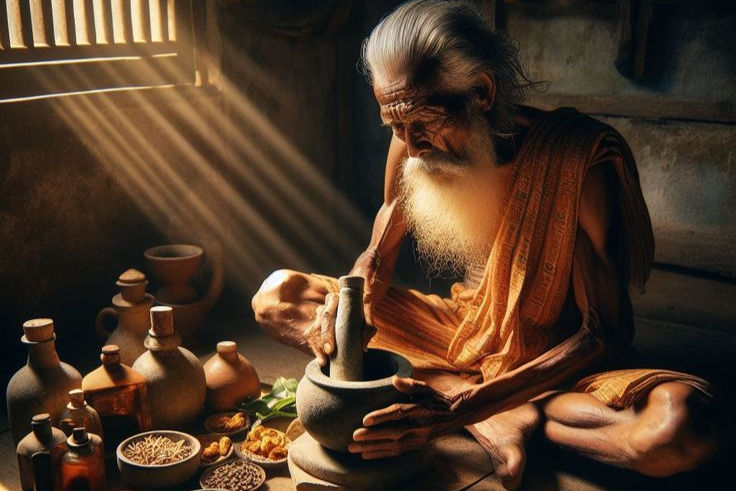
For generations, it unfolded in domestic rhythms: oil warming at dawn, elders insisting on weekly massages, infants anointed before their first bath. Care was tactile and seasonal, passed hand to hand without spectacle. Knowledge lived in gesture. The ritual offered something modern routines often neglect sustained, compassionate attention to the self.
Contemporary life, by contrast, is frictionless and fast. We scroll more than we sense; we optimize more than we inhabit. Muscles hold the quiet architecture of stress. Sleep thins. Attention fractures. In this context, abhyanga feels newly urgent. Warm oil steadies what anxiety disperses. Repetition restores rhythm to days ruled by urgency. Touch returns us to the body as residence rather than resource. Emerging research on therapeutic touch and somatic regulation now affirms what tradition intuited: that intentional self-massage can support circulation, improve sleep, and modulate stress responses. But beyond metrics lies a subtler shift, a renewed intimacy with one’s own physicality. The ritual becomes a conversation conducted through palms and breath.
Abhyanga endures because it is elegantly pragmatic. It asks for little, offers much, and dignifies maintenance as mindfulness. In an era seduced by novelty, this ancient rite proposes a quieter luxury: to care consistently, to move slowly, to anoint the body not as ornament, but as inheritance.

Comments